
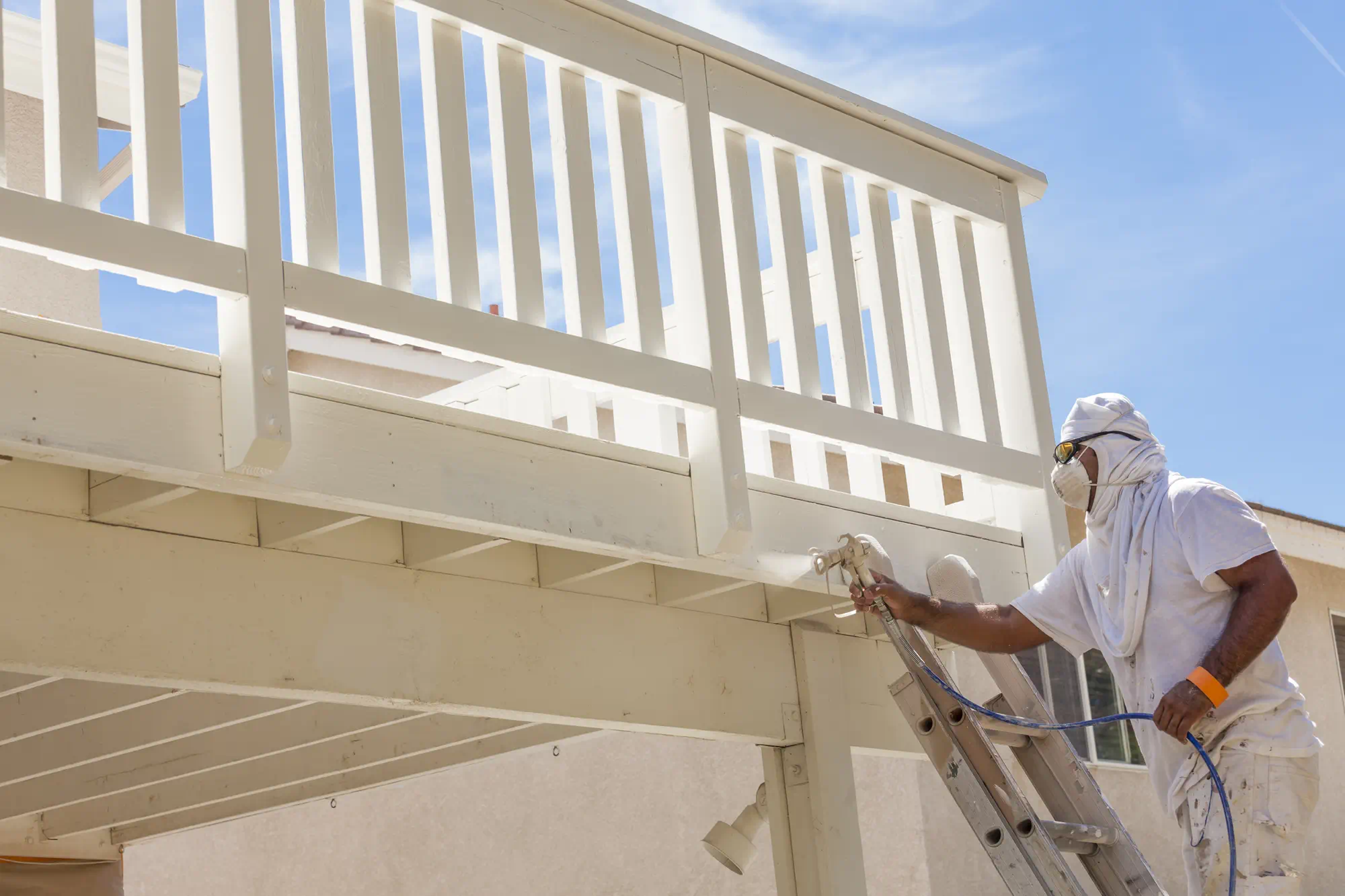
Homeowner Resource Guide
Exterior Painting Guide for Texas Homeowners
Everything you need to know about painting your home exterior in Texas — from recognizing the signs it is time to repaint, to choosing the right products, colors, and contractor for the harsh Central Texas climate.
When to Repaint Your Home Exterior: 6 Warning Signs
Central Texas is one of the toughest climates in the country for exterior paint. Intense UV radiation, summer surface temperatures above 150 degrees Fahrenheit, and dramatic daily temperature swings accelerate paint degradation far faster than in moderate climates. Knowing the warning signs helps you repaint before minor cosmetic issues turn into expensive structural damage.
Peeling and Flaking
Paint that is lifting away from the surface in sheets or flakes has lost adhesion. In Texas, this most often results from moisture trapped behind the paint film, inadequate surface prep on the previous paint job, or an oil-based paint layer that has become brittle under years of thermal cycling. Peeling exposes bare wood or substrate to moisture, insects, and UV damage — left unaddressed, it leads to wood rot and far more expensive repairs.
Fading and Color Loss
Central Texas averages 230-plus sunny days per year with a UV index that regularly reaches 10 or 11 in summer. This relentless UV exposure breaks down pigment molecules, causing colors to wash out — especially on south-facing and west-facing walls. Dark colors fade fastest because they absorb more radiation. Significant fading signals that the paint binder is also degrading, reducing the coating's protective function.
Chalking
Run your hand across the siding — if it comes away with a fine powdery residue, the paint is chalking. This happens when UV radiation breaks down the paint binder, leaving loose pigment particles on the surface. Light chalking is normal as paint ages, but heavy chalking means the coating is failing and needs replacement. New paint applied over a chalky surface without proper cleaning and priming will peel within 1 to 2 years.
Mildew and Algae Growth
Black or green staining on siding, soffits, and under eaves is a sign of mildew or algae. North-facing walls and areas that remain shaded and damp are most vulnerable. While surface mildew can be cleaned, recurring growth indicates that the paint's built-in mildewcide has been depleted. Repainting with a premium product containing fresh mildewcide provides long-lasting protection.
Cracking and Alligatoring
Fine cracks that form a pattern resembling alligator skin indicate that the paint film has become too rigid to flex with the substrate. This is common on older homes with multiple layers of oil-based paint and on surfaces exposed to extreme daily temperature swings. Once cracking begins, moisture penetrates through the fractures and accelerates deterioration from within.
Caulk Failure and Gaps
Inspect the caulk around windows, doors, trim joints, and where different materials meet. If caulk has cracked, pulled away, or gone missing, water is entering the wall cavity. In Central Texas, the repeated expansion and contraction cycle from summer heat hardens caulk faster than in moderate climates. Repainting provides the opportunity to replace all failed caulk and reseal every joint.
Best Exterior Paint Brands for Texas Homes
Not all paint is created equal — and in a climate as demanding as Central Texas, the difference between a premium product and a builder-grade one is the difference between a 10-year paint job and a 4-year paint job. After thousands of projects across Waco, Temple, Georgetown, Round Rock, and Austin, these are the brands and product lines we trust.
Sherwin-Williams Duration
Duration is Sherwin-Williams' flagship exterior product and our most-recommended paint for Central Texas repaints. Its PermaLast technology provides exceptional adhesion and flexibility, allowing the paint film to expand and contract with substrates during daily temperature swings of 80 degrees or more. Duration is self-priming on most previously painted surfaces in good condition, which can save a full day on prep time. It carries a lifetime limited warranty, includes built-in mildewcide, and is formulated with advanced UV-stabilizing resins that resist chalking and fading significantly longer than standard exterior paints. Best for repaints on wood and fiber cement siding where you want the best balance of longevity, coverage, and value.
Sherwin-Williams Emerald
Emerald is Sherwin-Williams' ultra-premium line, positioned above Duration for projects where maximum performance is the priority. It delivers exceptional hide and coverage — often providing one-coat coverage on color-to-color changes that would require two coats with other products. Emerald's advanced acrylic resin system provides industry-leading resistance to blistering, peeling, and early paint failure. For Central Texas homeowners choosing deep or bold body colors, Emerald's superior pigment loading ensures rich, consistent color that resists UV fading. It also carries a lifetime limited warranty and is self-priming.
Benjamin Moore Aura Exterior
Aura Exterior is Benjamin Moore's top-tier exterior paint and features their proprietary Color Lock technology — a resin system that locks pigment particles in place to deliver industry-leading fade resistance. In a market with 230-plus sunny days per year, this matters enormously. Aura is our top recommendation for dark and bold exterior colors — navy, charcoal, forest green, deep red — that would fade noticeably faster with standard products. It also offers excellent early rain resistance (it can withstand light rain just 60 minutes after application in warm conditions), which is valuable during Texas spring when afternoon thunderstorms can develop quickly. Lifetime limited warranty with built-in mildewcide.
Why Acrylic Latex Paint Dominates in Texas
If you ask any experienced exterior painter in Texas what type of paint they use, the answer is almost always 100-percent acrylic latex. Oil-based (alkyd) paints, once the standard for exteriors, have been largely abandoned for good reason — they cannot handle the Texas climate. Here is why acrylic latex wins.
Flexibility in Extreme Heat
Acrylic latex paint remains flexible even at surface temperatures above 150 degrees Fahrenheit. Oil-based paints become brittle over time, cracking and peeling as substrates expand and contract through Texas's dramatic daily temperature swings. Acrylic latex stretches with the substrate, maintaining adhesion year after year.
Superior UV Resistance
Premium acrylic latex formulations contain UV-stabilizing resins and pigments that resist breakdown from solar radiation. Central Texas receives some of the highest UV exposure in the continental United States, and acrylic paints hold their color and film integrity significantly longer than oil-based products under these conditions.
Built-In Mildew Resistance
Every premium acrylic latex exterior paint includes mildewcide additives that inhibit mold and mildew growth. This is essential for north-facing walls, soffits, and shaded areas where Central Texas humidity creates ideal conditions for fungal growth. Oil-based paints are actually more susceptible to mildew because the organic oils in the binder serve as a food source for mold.
Breathability
Acrylic latex allows water vapor to pass through the paint film, which prevents moisture from becoming trapped between the paint and the substrate. Trapped moisture is the primary cause of blistering and peeling. In Texas, where humidity can spike after summer storms and morning dew is common, a breathable paint film is critical for long-term adhesion and durability.
Color Selection for the Texas Sun
Choosing exterior paint colors in Texas requires more thought than in cooler climates. The intensity of the sun dramatically affects how colors appear on your home and how quickly they fade. Here are the key considerations.
Fade-Resistant Colors
Earth tones, warm whites, greiges, and muted neutrals hold up best under intense UV because they use inorganic pigments (iron oxides and titanium dioxide) that are naturally UV-stable. Organic pigments — those used in bright reds, vivid blues, and saturated yellows — are more susceptible to UV breakdown and will fade faster. If you love bold colors, invest in a premium product like Benjamin Moore Aura with Color Lock technology and expect to monitor south-facing walls more closely for early fading.
Light vs. Dark Colors
Light body colors reflect more solar radiation and keep your siding cooler, which reduces thermal stress on both the paint film and the substrate. Dark colors absorb heat, pushing surface temperatures even higher and accelerating film degradation. Dark colors also show fading more dramatically than light ones. This does not mean you cannot use dark colors — but if you choose a deep charcoal, navy, or forest green for your body color, premium paint with advanced UV protection is essential, and the repaint cycle may be 1 to 2 years shorter than with a lighter shade.
HOA Considerations
Many Central Texas neighborhoods — particularly in Round Rock, Cedar Park, Pflugerville, Georgetown, and newer Waco-area developments — have HOA color restrictions. Before finalizing your palette, check your HOA's architectural guidelines for approved colors or pre-approval requirements. Some HOAs maintain a specific list of approved Sherwin-Williams or Benjamin Moore colors; others require you to submit samples for review by an architectural committee. A professional painting contractor like Glacier Home Exteriors can research your HOA guidelines and submit color selections on your behalf, saving you time and preventing costly do-overs.
Test Before You Commit
A color that looks perfect on a 2-inch swatch in a store will look completely different on a full wall under Texas sunlight. The warm, intense quality of Central Texas light shifts colors toward yellow throughout the day. Always test your top choices on large sample boards (at least 2 by 2 feet) and evaluate them against your home in morning, midday, and evening light before making a final decision. Pay attention to how the color interacts with your roof, stone accents, and landscaping.
Surface Prep — The Most Important Step
Ask any experienced painter what determines how long an exterior paint job will last, and the answer is always the same: preparation. A premium top coat applied over a poorly prepared surface will fail within 2 to 3 years. Proper surface prep accounts for 60 to 70 percent of the total project time on a quality paint job. Here is what a thorough prep process includes.
Power Washing
Every surface is pressure washed at the appropriate PSI — 1,500 to 2,000 PSI for wood and fiber cement siding, 2,500 to 3,000 PSI for brick, concrete, and stucco. A commercial mildewcide is added to the wash solution to kill mold and mildew spores at the root, not just remove surface growth. The home then dries for 24 to 48 hours before the next step.
Scraping and Sanding
All loose, peeling, or flaking paint is hand-scraped down to a sound edge using carbide scrapers. Bare wood is sanded smooth with 80- to 120-grit paper to create a surface profile that primer can grip. Glossy surfaces are deglossed with medium-grit sanding or a liquid deglosser to improve adhesion.
Caulking
Every gap, joint, and crack is sealed with premium 50-year paintable sealant — including window and door frames, trim joints, siding lap joints, and utility penetrations. Proper caulking prevents water intrusion, which is the number one cause of wood rot and paint failure in Central Texas.
Wood Rot Repair
Soft or damaged wood is replaced or consolidated with a two-part epoxy system. Nail holes and minor surface defects are filled with exterior-grade wood filler and sanded flush. Catching and repairing rot at this stage prevents it from spreading to structural components like rafters and wall framing.
Priming
Bare wood, repaired areas, and stain-prone surfaces receive a dedicated primer coat. Oil-based primers block tannin bleed on cedar and redwood. High-adhesion acrylic primers bond to chalky or glossy surfaces. Alkali-resistant primers prevent efflorescence from bleeding through on masonry. Proper priming ensures the finish coat bonds permanently to the substrate.
Exterior Painting Cost Ranges for Central Texas
Exterior painting costs vary based on home size, number of stories, surface condition, paint quality, and project complexity. Here are typical ranges for Central Texas as of 2024 — your actual estimate will depend on your home's specific conditions.
| Project Type | Typical Cost Range | Key Factors |
|---|---|---|
| Single-Story Full Repaint | $3,500 – $7,500 | Square footage, surface condition, number of colors |
| Two-Story Full Repaint | $6,000 – $12,000 | Scaffolding requirements, wall height, trim complexity |
| Trim, Fascia and Soffits Only | $1,500 – $4,000 | Linear footage, wood rot repair needs, access difficulty |
| Brick Painting or Limewash | $4,000 – $10,000 | Brick condition, efflorescence, application method |
| Stucco Elastomeric Coating | $5,000 – $12,000 | Crack repair extent, square footage, coating thickness |
All Glacier estimates include premium paint, full surface preparation, two coats, cleanup, and our workmanship warranty. Financing available through Enhancify with promotional terms up to 24 months.
Best Time of Year to Paint Your Home in Texas
Paint performance depends heavily on application conditions. Temperature, humidity, and direct sunlight all affect how the paint film cures and bonds to the substrate. Here is a season-by-season breakdown for Central Texas.
Spring (March – May) — Ideal
Temperatures consistently between 60 and 85 degrees, moderate humidity, and long daylight hours make spring the best painting season in Central Texas. The only risk is spring storm season — afternoon thunderstorms can develop quickly in April and May, requiring schedule flexibility.
Fall (September – November) — Ideal
As temperatures drop from summer peaks back into the 60-to-85 degree range, fall provides excellent painting conditions. Humidity is typically lower than spring, rain is less frequent, and the cooler mornings allow for earlier starts on sun-exposed walls. Fall is the busiest season for professional painters, so book early.
Summer (June – August) — Possible with Precautions
Professional crews paint through Texas summers by starting early (6:00 to 7:00 AM) on sun-exposed walls and following the shade throughout the day. Surface temperatures above 130 degrees cause paint to dry too fast, reducing adhesion and leaving brush marks. Avoid painting in direct sun during peak afternoon heat. Rain delays are rare in summer but heat precautions add 1 to 2 days to most projects.
Winter (December – February) — Limited Windows
Central Texas winters are mild enough for occasional painting when daytime highs reach the mid-50s or above and overnight lows stay above 35 degrees. However, shorter days, morning frost, and unpredictable cold fronts make scheduling challenging. Most painters reserve winter for interior work and smaller exterior touch-ups.
DIY vs. Professional Exterior Painting: When to Hire a Pro
Painting your home exterior yourself can save on labor costs, but the trade-offs are significant — especially in Texas where the climate demands precise product selection and meticulous surface preparation. Here is an honest comparison.
When DIY Makes Sense
- Single-story home with easy ground-level access
- Minimal prep needed — existing paint is in fair condition
- Single body color with simple trim
- You own or can rent a quality airless sprayer
- You have experience with surface preparation
- You can dedicate 2 to 3 full weekends to the project
When to Hire a Professional
- Two-story home requiring scaffolding or extension ladders
- Significant prep work — peeling paint, wood rot, caulk failure
- Multiple colors, complex trim, or specialty surfaces
- Stucco, brick, or masonry requiring specialty coatings
- You want the job done in days, not weekends
- You want a workmanship warranty and product guarantees
- Safety concerns — ladder falls are a leading cause of home injury
The bottom line: Surface preparation is where most DIY exterior paint jobs fall short. Skipping or shortcutting the scraping, caulking, priming, and wood repair steps — the work that accounts for 60 to 70 percent of a professional paint job — results in a finish that looks good initially but fails within 2 to 4 years. If your home needs significant prep work, hiring a professional almost always delivers better long-term value.
Frequently Asked Questions About Exterior Painting in Texas
Answers to the most common questions Texas homeowners ask about exterior painting projects. Have a question not listed here? Contact us or call (254) 265-8898.
How often should I repaint my home exterior in Texas?
What is the best exterior paint for the Texas climate?
Can I paint my house exterior in the Texas summer?
How much does it cost to paint a house exterior in Central Texas?
Should I paint my house myself or hire a professional?
Ready to Repaint Your Home's Exterior?
Glacier Home Exteriors provides free, detailed painting estimates for homeowners across Central Texas — from Waco to Austin. We will assess your home's condition, discuss color options, recommend the right products, and provide an itemized written quote with no hidden charges.
View our exterior painting services • Explore financing options