Homeowner Resource Guide
Siding Comparison Guide: Best Options for Texas Homes
Choosing the right siding for a Central Texas home means accounting for extreme heat, hail, UV radiation, termites, and humidity. This guide compares the four most common siding materials — fiber cement, vinyl, engineered wood, and natural wood — so you can make an informed decision for your home and budget.
Why Your Siding Choice Matters More in Texas
Not all siding materials perform equally, and in Central Texas the performance gap is dramatic. Your home’s exterior cladding must withstand summer air temperatures that regularly exceed 100°F, wall surface temperatures that can reach 160–170°F on south- and west-facing elevations, severe hailstorms from March through June, relentless UV radiation (2,600+ hours of direct sunlight per year), year-round termite pressure, and humidity swings that can shift from bone-dry to Gulf-level moisture within days.
A siding material that performs adequately in the Pacific Northwest or upper Midwest may fail prematurely in our climate. This guide breaks down how each material holds up under the specific conditions Central Texas delivers, along with realistic cost ranges, warranty details, and maintenance expectations so you can choose with confidence.
Siding Material Comparison for Central Texas
This table compares the four most common siding materials across the performance metrics that matter most for Texas homes. James Hardie fiber cement leads in every category that defines long-term performance in our climate.
| Feature | James Hardie Fiber Cement | Vinyl Siding | Engineered Wood (LP SmartSide) | Natural Wood (Cedar/Redwood) |
|---|---|---|---|---|
| Durability / Lifespan | 30 – 50 years | 15 – 25 years | 20 – 30 years | 15 – 30 years |
| Hail Resistance | Excellent — absorbs impact without fracturing | Poor — cracks and shatters on impact | Good — dents possible with large hail | Fair — dents, splits, and splinters on impact |
| Maintenance | Very Low — hose wash annually | Low — occasional cleaning | Moderate — repaint every 7 – 10 years | High — paint or stain every 3 – 5 years |
| Installed Cost / sq ft | $6 – $13 | $3 – $8 | $5 – $10 | $8 – $16 |
| Warranty | 30-year substrate + 15-year ColorPlus finish | Lifetime (heavily prorated, limited coverage) | 5-year finish / 50-year substrate | Manufacturer varies, typically 5 – 10 years |
| Texas Heat Performance | Dimensionally stable at 170°F+ surface temps | Warps and buckles above 160°F | Stable but wood fibers absorb moisture in humidity swings | Warps, splits, and cups in extreme heat and humidity cycles |
| Fire Rating | Class A (Non-Combustible) | Class C (Melts/Burns) | Class A (treated) | Class C (Combustible) |
Prices reflect 2024–2025 Central Texas market averages for installed cost including labor and materials. Actual pricing varies by project scope, home size, and complexity.
Why Fiber Cement Siding Dominates in Texas
James Hardie fiber cement siding holds the dominant market share in Texas for good reason. No other material addresses the full spectrum of challenges our climate presents as effectively.
Hail Resistance
Central Texas sits in one of the most active hail corridors in the country. Severe storms regularly produce quarter-sized to golf-ball-sized hailstones from March through June. Vinyl siding cracks and shatters under these impacts, especially in cold conditions. Natural wood dents, splits, and splinters. Fiber cement absorbs hail impact without fracturing, keeping your home’s envelope sealed and protected even after major storm events.
Extreme Heat Stability
When south- and west-facing walls reach surface temperatures of 160–170°F during Texas summers, vinyl siding begins to soften, warp, and permanently distort. Once buckled, it cannot be repaired — only replaced. Fiber cement is dimensionally stable at temperatures far beyond anything Texas produces. It will not warp, buckle, melt, or deform regardless of exposure.
Termite and Rot Immunity
Every county from McLennan to Travis has active subterranean termite populations. Wood siding and wood-based composites are vulnerable to termite damage that can go undetected for years inside wall cavities. Fiber cement contains zero organic material that termites can consume and is completely immune to wood rot, mold, and fungal decay — eliminating one of the most costly risks for Texas homeowners.
Class A Fire Resistance
Fiber cement carries the highest fire classification available for building materials. It is non-combustible, will not ignite when exposed to direct flame, and produces no toxic fumes. Wildfire risk is increasing across parts of Central Texas, particularly in communities bordering brush and grassland. Many insurance carriers offer premium discounts for homes with non-combustible exterior cladding.
HardiePlank Profiles Explained
James Hardie offers several distinct profiles to match virtually any architectural style. Understanding the differences helps you choose the right look for your home and budget.
HardiePlank Lap Siding
The most popular siding product in America. HardiePlank lap siding delivers the classic horizontal clapboard look that works with everything from traditional ranch homes to modern farmhouse designs. Available in smooth and cedarmill (wood-grain) textures, each plank is 5/16-inch thick and comes in widths from 5.25 to 12 inches. The width you choose controls the depth of shadow lines and the visual scale of your exterior. We install HardiePlank on approximately 70% of our Central Texas siding projects.
Best for: Whole-house re-siding, builder-grade upgrades, insurance restoration, ranch and colonial styles
HardiePanel Board-and-Batten
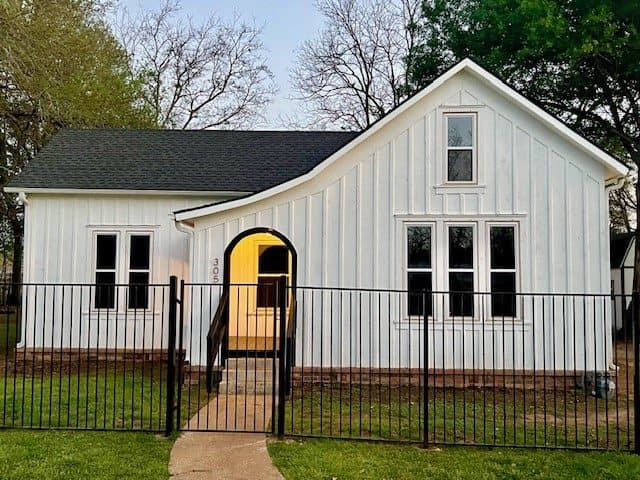
HardiePanel delivers a clean vertical board-and-batten or flat-panel look that adds height and modern dimension to any facade. The 4x8 and 4x10 panels install faster than individual planks on large wall surfaces, and the vertical lines create striking contrast when mixed with horizontal HardiePlank. This profile has become extremely popular for modern farmhouse designs throughout Waco, Georgetown, Round Rock, and Austin.
Best for: Modern farmhouse, gable accents, mixed-profile designs, commercial storefronts
HardieShingle Siding
HardieShingle panels replicate the look of individual cedar shingles with staggered bottom edges, but without the splitting, warping, and rot that plague real wood shingles in Central Texas humidity. Each panel covers approximately 14.7 square feet and installs significantly faster than nailing individual shingles. HardieShingle adds texture and visual interest that no other siding profile can match.
Best for: Gable accents, dormers, upper-story detail, craftsman and cottage styles
Many of our Central Texas projects combine two or more profiles — for example, HardiePlank on the main body with HardiePanel on gable ends and HardieShingle on dormer accents. Mixing profiles creates architectural depth and curb appeal that single-profile installations cannot achieve.
ColorPlus Factory Finish vs. Field Painting
When you choose James Hardie fiber cement siding, you have two finish options: ColorPlus Technology (factory-applied) or primed boards that are painted on-site after installation. The performance difference is substantial, especially in Central Texas.
ColorPlus Factory Finish (Recommended)
- +Multiple coats applied and baked under controlled factory conditions
- +Perfect color consistency from board to board, batch to batch
- +UV-stabilized pigments resist fading for 15+ years
- +15-year warranty against peeling, cracking, and chipping
- +30+ curated colors in multiple collections
- +No painting delay after installation — immediate curb appeal
Field Painting (Primed Boards)
- •Lower upfront cost (primed boards are less expensive)
- •Unlimited color choices from any paint brand
- •Must be painted within 180 days of installation
- •Expect to repaint every 5–7 years in Central Texas sun
- •Repainting costs $4,000–$8,000 per cycle for a full home
- •Color consistency depends on painter skill and conditions
We recommend ColorPlus for every Central Texas installation. Over a 20-year period, the savings on avoided repainting — typically $12,000 to $24,000 — far exceeds the modest upfront premium for the factory finish. Your home looks freshly painted for over a decade without lifting a brush.
Siding Cost Ranges for Central Texas
Understanding realistic cost ranges helps you plan your budget and evaluate contractor quotes. These figures reflect current Central Texas market pricing for professionally installed siding, including materials, labor, tear-off of existing siding, substrate inspection, moisture barrier, and cleanup.
James Hardie Fiber Cement
$6 – $13 / sq ft
30–50 year lifespan, minimal maintenance
Vinyl Siding
$3 – $8 / sq ft
15–25 year lifespan, may need early replacement in TX
LP SmartSide (Engineered Wood)
$5 – $10 / sq ft
20–30 year lifespan, periodic repainting required
Natural Wood (Cedar/Redwood)
$8 – $16 / sq ft
15–30 year lifespan, high ongoing maintenance
Typical Full Home (1,500 sq ft siding area)
$15,000 – $28,000
James Hardie with ColorPlus finish
Larger Home (2,500+ sq ft siding area)
$25,000 – $45,000
James Hardie with ColorPlus finish
Glacier Home Exteriors provides detailed, line-item written estimates at no cost. We also offer financing through Enhancify with plans including 100% financing of the project cost for qualified homeowners. You can check your rate with no impact to your credit score through a soft-pull pre-qualification process.
HOA Considerations for Siding Replacement in Texas
If your home is in an HOA-governed community — and a significant percentage of homes in Round Rock, Georgetown, Cedar Park, Pflugerville, and North Austin are — you will need architectural review committee approval before replacing your siding. Here is what to know:
- Material restrictions:Most Texas HOAs allow fiber cement siding. Many have updated their architectural guidelines to specifically recommend or require it. Some HOAs prohibit vinyl siding or certain wood products. Check your CC&Rs (Covenants, Conditions & Restrictions) before selecting a material.
- Color approval:HOAs typically maintain an approved color palette. James Hardie ColorPlus colors are factory-consistent, which HOAs prefer because the color your committee approves is exactly the color that gets installed — no variation from field mixing or painting conditions.
- Application process: Most HOA architectural review applications require a description of the proposed material, the specific color (with a sample or spec sheet), and sometimes a rendering or mockup. We provide product specification sheets, ColorPlus color samples, and any documentation your HOA requires.
- Timeline: HOA review typically takes 2 to 6 weeks. We recommend submitting your application before finalizing your project timeline so committee review does not delay your installation start date.
- Insurance-driven replacements:If your siding replacement is the result of hail or storm damage and is covered by your homeowner’s insurance, most HOAs will expedite the approval process. We work with homeowners and HOAs to streamline insurance-related siding projects.
Glacier Home Exteriors has completed siding projects in HOA-governed communities across Central Texas. We understand the approval process and can help you navigate it smoothly.
Siding Comparison FAQs
Answers to the most common questions Central Texas homeowners ask when comparing siding materials.
What is the best siding material for homes in Texas?
James Hardie fiber cement siding is widely considered the best siding material for Texas homes. It is engineered for hot, humid climates (HZ5 climate zone), resists hail impact without fracturing, carries a Class A non-combustible fire rating, and is immune to termites and wood rot. The ColorPlus factory finish resists UV fading for 15+ years — critical in a state that receives over 2,600 hours of direct sunlight annually. While vinyl costs less upfront, it warps and distorts in Texas heat and cracks during hailstorms. Natural wood requires constant maintenance in our humidity. Fiber cement delivers the best combination of durability, appearance, and total cost of ownership for Central Texas conditions.
How much does siding replacement cost in Central Texas?
Siding replacement costs in Central Texas vary by material and home size. James Hardie fiber cement siding typically costs $6 to $13 per square foot installed, which translates to $18,000 to $35,000 for a typical 2,000-square-foot home. Vinyl siding runs $3 to $8 per square foot installed. Engineered wood (LP SmartSide) falls between $5 and $10 per square foot. Natural cedar or redwood siding costs $8 to $16 per square foot. These prices include materials, labor, tear-off of existing siding, sheathing inspection, moisture barrier, and cleanup. Glacier Home Exteriors provides detailed written estimates at no cost, and we offer financing through Enhancify with promotional plans for qualified homeowners.
Is vinyl siding a good choice for Texas homes?
Vinyl siding is not ideal for most Texas homes, particularly in Central Texas. The primary issue is heat: when south- and west-facing walls reach surface temperatures of 160°F or higher — which happens regularly during Texas summers — vinyl siding can warp, buckle, and permanently distort. Vinyl also fades significantly under sustained UV exposure, cracks and shatters during hailstorms, and melts when exposed to flame (Class C fire rating). While vinyl is the least expensive option upfront, its shorter lifespan and susceptibility to Texas weather extremes mean higher total cost over time. For budget-conscious homeowners who want better performance, engineered wood (LP SmartSide) or fiber cement are significantly better investments in our climate.
What is the difference between ColorPlus factory finish and field painting?
ColorPlus is James Hardie's proprietary factory-finishing process where multiple coats of UV-resistant color are applied and baked onto fiber cement boards under precisely controlled conditions. Field painting means applying paint on-site after the siding is installed. The key differences: ColorPlus delivers perfectly consistent color from board to board with no brush marks, drips, or thin spots. It comes with a 15-year warranty against peeling, cracking, and chipping. Field-applied paint in Central Texas typically lasts 3 to 5 years on sun-exposed walls before needing a refresh. Over 20 years, a homeowner who field-paints will spend $8,000 to $16,000 on repainting, while ColorPlus may need one repaint at most. We recommend ColorPlus for every Central Texas installation because the lower lifetime maintenance cost more than offsets the modest upfront premium.
Will my HOA approve James Hardie fiber cement siding?
Yes — James Hardie fiber cement siding is approved by virtually every HOA in Central Texas. Most HOA architectural review committees prefer fiber cement because it maintains a consistent, high-quality appearance for decades, comes in 30+ factory-finished colors that do not fade or chalk like painted wood or vinyl, and increases property values throughout the neighborhood. Many Texas HOAs have actually updated their guidelines to require or recommend fiber cement siding specifically. Before starting any siding project, we recommend submitting your color selection and product specifications to your HOA architectural review committee for written approval. Glacier Home Exteriors can provide product specification sheets and color samples to include with your HOA application. We have successfully completed siding projects in HOA-governed communities across Waco, Georgetown, Round Rock, Cedar Park, Pflugerville, and Austin.
Ready to Choose the Best Siding for Your Texas Home?
Glacier Home Exteriors is Central Texas’s trusted James Hardie Elite Preferred Contractor. We provide free on-site consultations with detailed, line-item estimates — no pressure, no obligation. Let us help you choose the right siding material, profile, and color for your home.